
I thought I knew how men shopped before I worked retail. Then I spent years standing on the sales floor, in fitting rooms, and at the register, and it completely changed my perspective.
Most guys don’t shop with strategy. They shop with hope, insecurity, and a surprising amount of autopilot behavior. The patterns were so consistent I could predict them after just a few minutes of conversation.
This post isn’t about shaming anyone. It’s about sharing what I observed so you can avoid the common traps and make better decisions next time you’re out shopping.
The “I’ll Know It When I See It” Trap
The most common line I heard was some version of “I’m not sure what I want… I’ll know it when I see it.”
Here’s the problem: most guys actually don’t know what looks good on them. They’re waiting for a magical piece to make them feel transformed. In reality, they end up buying whatever feels comfortable in the moment or matches what they already own — even if it’s not working.
I watched men try on the same oversized fit in six different colors because it “felt safe.” Comfort in the fitting room often translates to sloppy once they get home.
The Size Denial Is Real
One of the biggest eye-openers was how many men refused to accept their actual size.
A guy would grab an XL or XXL even when the medium clearly fit better in the shoulders. When I gently suggested trying the correct size, I’d often hear “Nah, I like it loose” or “I’ll lose a few pounds soon.”
The result? Shirts that looked baggy and cheap, pants that sagged in the seat, and jackets that made them look bigger than they actually were. Proper fit almost always makes you look sharper and more put-together, regardless of your build.
The Fantasy Wardrobe Phenomenon
This was fascinating to watch. Guys would buy clothes for a version of themselves that didn’t exist yet.
The gym clothes for the workout routine they’d start “next month”
The dress shirts for the promotion that hadn’t come
The trendy pieces for a lifestyle they saw on Instagram
They were buying for an imagined future instead of their actual Monday-through-Sunday life. These pieces usually ended up unworn with tags still on.
Real life happens in the clothes you buy for who you are right now, not who you hope to become.
Price vs Value Confusion
Many customers equated higher price with better. Others went straight for the cheapest option and wondered why it looked bad after two washes.
I saw guys drop $120 on a “premium” shirt with poor shoulder construction while ignoring a $45 oxford that actually fit properly. Price is only one factor. Fabric, construction, and — most importantly — fit determine real value.
The Mirror Lies (And So Does Store Lighting)
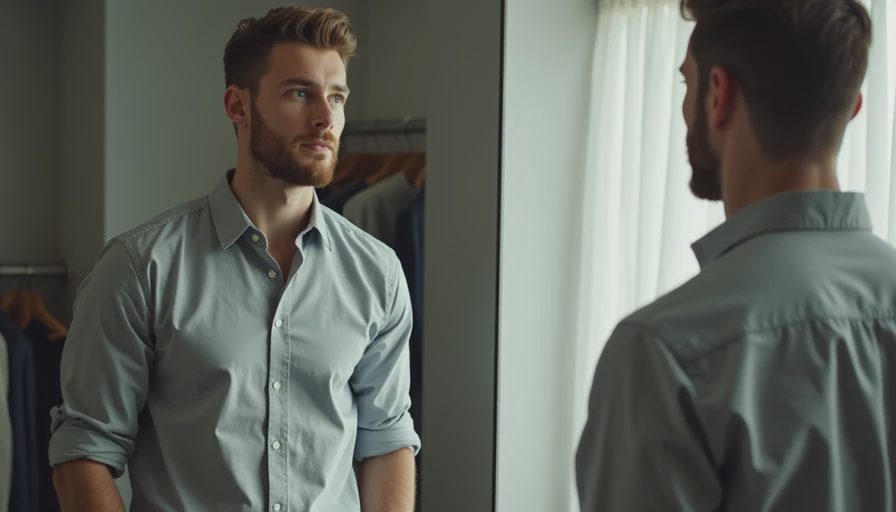
Store lighting and mirrors are designed to flatter. I can’t count how many times a customer loved something in the fitting room and then texted me a week later saying it looked different at home.
My advice was always the same: take a photo in the store under normal lighting, or better yet, step out into the hallway if allowed. Check it with your phone camera. Walk around. Sit down. The fitting room never tells the full story.
What Guys Actually Asked in the Fitting Room
The most common questions were surprisingly practical:
“Does this make me look fat?”
“Can I wear this to work without a tie?”
“Will this shrink in the wash?”
“Be honest — does this look cheap?”
They didn’t want fashion advice. They wanted honest reassurance that they wouldn’t embarrass themselves or waste money.
The Power of the Second Opinion
The customers who improved the fastest were the ones who brought a friend or trusted my feedback. Having another set of eyes catches the things you miss when you’re standing too close to the mirror.
My wife now plays this role for me on bigger purchases. It’s saved us from plenty of questionable buys.
What This Means for Your Shopping Trips
Here’s what I want you to take away from all those hours I spent on the floor:
Go with a plan. Know what gaps you’re actually trying to fill before you walk in.
Prioritize fit over everything else. Especially shoulders and length.
Buy for your real life, not a fantasy version of next season.
Be honest about sizing. The right size almost always looks better.
Check construction and fabric feel. Rub it, stretch it lightly, look at the seams.
Walk away from “maybe” pieces. If you’re not excited about it in the store, you won’t reach for it at home.
My Evolution After Retail
Working with customers every day made me a much more intentional shopper myself. I became ruthless about bringing home only pieces that checked multiple boxes. My closet got smaller but felt more useful.
Even now, years later, when I’m in a store I catch myself thinking like a salesman — mentally dressing the guy in front of me and spotting the same patterns I used to see daily.
The Kindest Truth
Most men aren’t bad at dressing. They’re just overwhelmed, poorly informed, and stuck in old habits. The retail floor showed me that with a little honest guidance, almost anyone can look noticeably better without spending more money.
That’s why this blog exists. To give you the kind of straightforward advice I wish more customers had received.
Next time you’re shopping, slow down. Ask better questions. Focus on what actually serves your daily life instead of chasing quick dopamine hits from new purchases.
Your wallet and your reflection will both thank you.
Look clean. Keep the change.