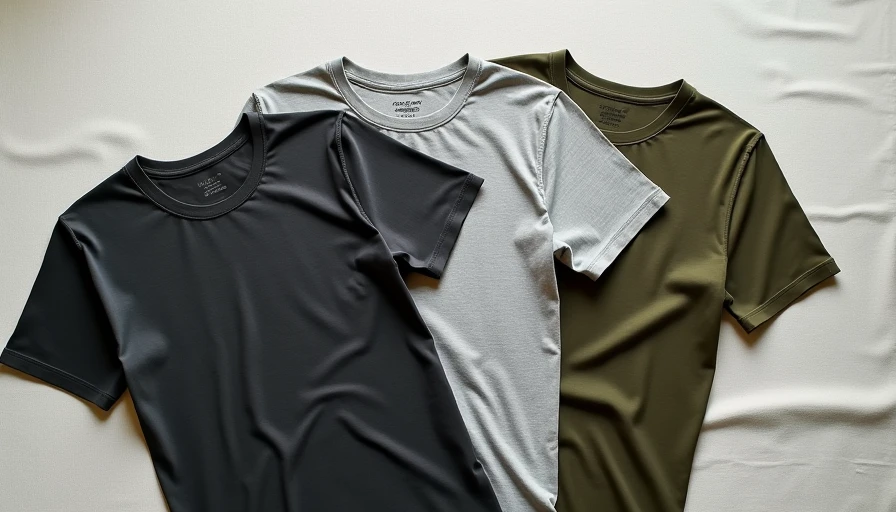

I’ll be honest: the T-shirt is the most worn and most abused piece in most guys’ wardrobes. It’s also the item that reveals fit problems faster than anything else. Walk around any weekend spot and you’ll see it — baggy tees that swallow the body, stretched-out necks, sleeves that flap around like wings, or shirts so tight they look painted on.
After dressing thousands of regular guys on the retail floor, I can tell you this: a well-fitting T-shirt instantly makes you look sharper, while a bad one drags the whole outfit down, no matter how good the rest is.
In this post, we’re breaking down exactly how a T-shirt should fit in the three areas that matter most: shoulders, chest, and sleeves.
Why T-Shirt Fit Is Harder Than It Looks
T-shirts are deceptively simple. No buttons, no structure, no forgiveness. When the fit is off, there’s nothing to hide it. The fabric either drapes cleanly or it doesn’t. Most guys buy based on “comfort” in the store mirror and end up with something that looks sloppy once they move.
The goal isn’t skin-tight or oversized streetwear. It’s a balanced fit that skims the body, respects your proportions, and looks intentional even after a few washes.
Shoulders: The Foundation
This is the most important part. If the shoulders are wrong, nothing else saves the shirt.
What good shoulder fit looks like:
The seam sits exactly at the edge of your shoulder bone — not falling down your arm, not creeping up toward your neck.
No puckering or divots at the joint.
The shoulder width feels balanced, neither pulling across your back nor sliding off.
When the shoulder seam is right, the whole T-shirt hangs properly. Your posture looks better and the shirt doesn’t twist when you move.
Common mistakes:
Buying too big → seams slide down your arms
Buying graphic tees with huge prints that stretch the shoulders
Ignoring how the fabric relaxes after washing
Chest: Skim, Don’t Squeeze or Billow
The chest should follow your body without drama.
Ideal chest fit:
The fabric skims across your chest with light contact — no pulling or horizontal wrinkles across the pecs.
No excessive fabric pooling at the sides (too big).
No stretched “second skin” look (too small).
A little natural drape is good. You should be able to pinch about 1–1.5 inches of fabric at your side when standing naturally. More than that and it’s too loose. Less than an inch and it’s probably too tight for everyday wear.
For most regular builds, a “slim-straight” or “relaxed” cut works better than super skinny athletic fits.
Sleeves: The Detail That Makes or Breaks It
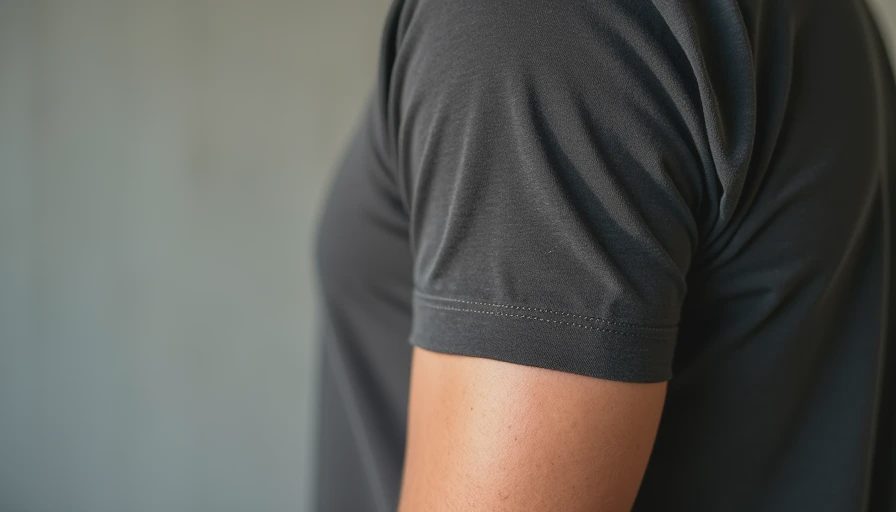
Sleeve fit separates good T-shirts from the ones that look cheap.
What good sleeves look like:
The sleeve hem hits about halfway between your shoulder and elbow — roughly 2–4 inches above the elbow when your arms are down.
The sleeve opening hugs your upper arm without digging in or flapping loosely.
No twisting or bunching when you move your arms.
If the sleeves are too long, they make your arms look shorter and the whole shirt sloppy. Too tight, and they cut into your arms and ride up when you move.
The Full Picture: How It All Works Together
When shoulders, chest, and sleeves are right, the T-shirt does three things:
It makes your shoulders look broader and more structured.
It creates a clean, V-shaped torso line.
It stays put when you move — no constant adjusting.
Length matters too: the hem should hit right at the middle of your fly or slightly below when untucked. Long enough to cover your waistband, short enough not to look like a dress.
How to Test T-Shirt Fit in the Store (or at Home)
Use this quick checklist:
Shoulder Check: Stand straight. Seam should land on the bony edge of your shoulder.
Chest Check: Breathe normally. No pulling, no big gaps at the sides.
Sleeve Check: Arms down, then raise them like you’re driving. Sleeves should stay in place and feel natural.
Movement Test: Reach across your body, bend down, sit. The shirt should move with you, not against you.
Mirror Walk: Look from the side. Does it create a clean line or add bulk?
Affordable T-Shirts That Actually Fit Well
You don’t need to spend $40+ on a basic tee. Some of my go-to budget performers:
Uniqlo Supima or Airism cotton tees (great shoulder structure)
Gap or Old Navy when you size carefully and catch sales
J.Crew Factory heavyweight tees during promotions
The key is fabric weight. Look for mid-to-heavyweight cotton that holds its shape after washing. Thin, cheap tees stretch out and look sloppy fast.
Quick Fixes for Your Current Tees
Don’t throw everything out. Try these:
Size down if the shoulders are sliding.
Take to a tailor for sleeve shortening (usually cheap and game-changing).
Wash in cold water and air dry to prevent stretching.
Use fabric clips or small stitches to temporarily adjust overly long hems.
My Own T-Shirt Evolution
Early in my retail days I wore whatever was cheapest and “comfortable.” Once I started paying attention to shoulder placement and sleeve length, even my basic black and white tees started looking more expensive. Now I keep my T-shirt drawer tight — maybe 8–10 really good ones that I rotate and actually enjoy wearing.
My wife notices when I put on a properly fitted tee versus an old baggy one. The difference is that quiet confidence that comes from knowing you look clean without trying too hard.
The Bigger Lesson
Mastering T-shirt fit teaches you something that applies to every other piece in your wardrobe: proportion and intention beat brand names and price tags. A $15 tee that fits perfectly will always beat a $50 one that doesn’t.
This is pure Fit Over Hype. Focus on how clothes actually sit on your body instead of chasing the next hyped release.
Next time you’re reaching for a T-shirt, take an extra 10 seconds in front of the mirror. Check those shoulders, chest, and sleeves. Small adjustments here create the biggest visual upgrades.
Your everyday outfits will thank you.
Look clean. Keep the change.